
COFFEE BAR CABINETS
Custom Built-In Coffee Bar Cabinets
A custom built-in coffee bar cabinet is a dedicated coffee station, designed and installed to fit your kitchen exactly — typically built on a 24-inch-deep base cabinet, with a landing zone for your machine, storage for cups and beans, and its own outlets. Unlike a freestanding cart, it’s built into your home for good.
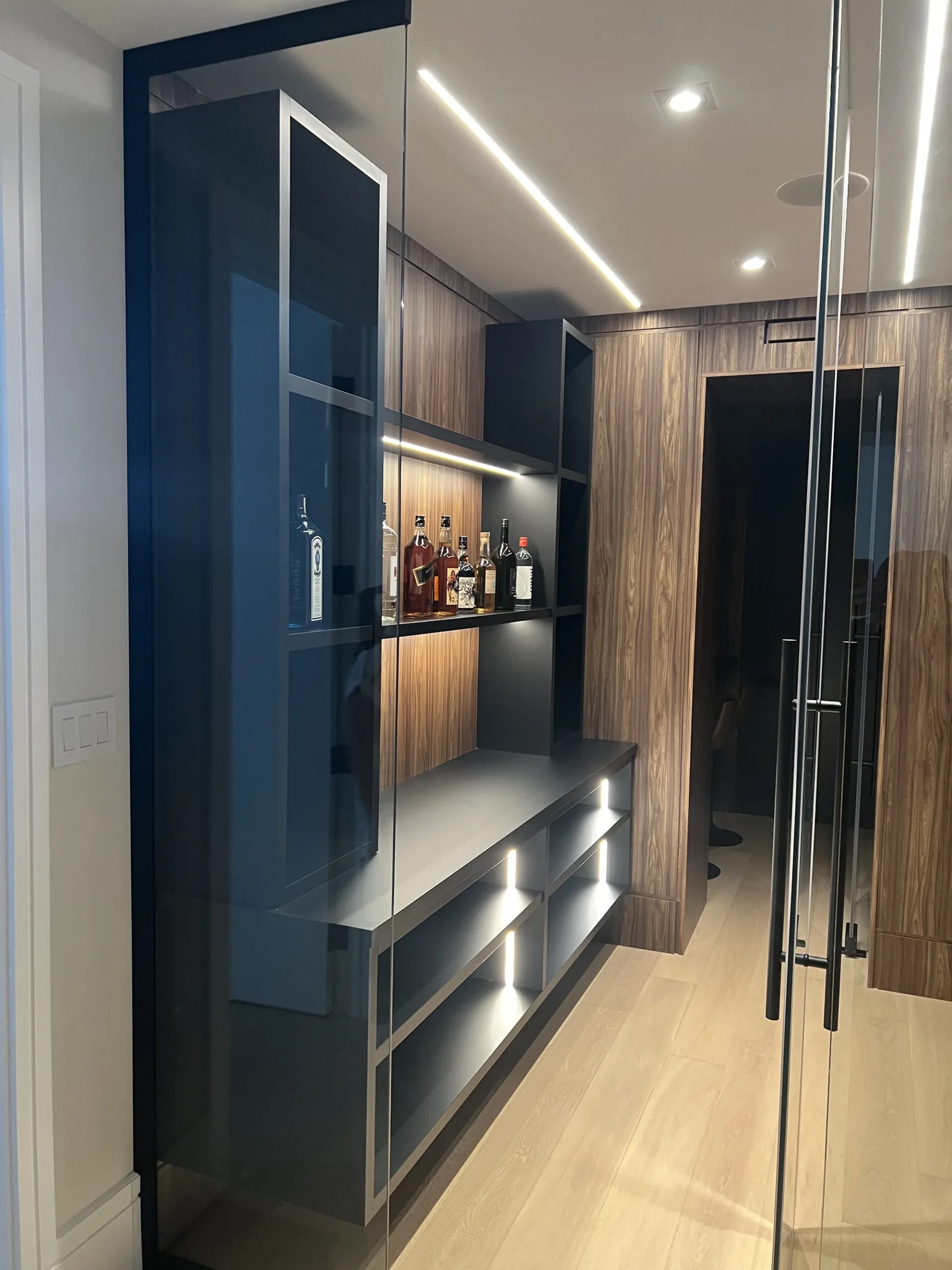
What Goes Into a Built-In Coffee Bar Cabinet?
A great coffee station is more than a machine on the counter — it’s designed around a ritual you repeat every single morning, which is exactly why it rewards real planning.
Whether it anchors a larger custom kitchen storage plan or joins a full run of custom kitchen cabinets, a built-in coffee bar is designed around four things:
- A machine landing zone — a heat- and moisture-tolerant counter surface sized for your espresso machine or drip brewer, with working room beside it
- A water line — plumbed machines and hot-water taps need a supply line with a shutoff, planned before the cabinets are built, not after
- Storage for cups and beans — open shelving for everyday mugs, drawers with dividers for pods, filters and beans, so nothing rattles or hides
- An appliance garage — a door or lifting panel that hides the machine completely when you’re not using it
How Big Should a Coffee Bar Cabinet Be?
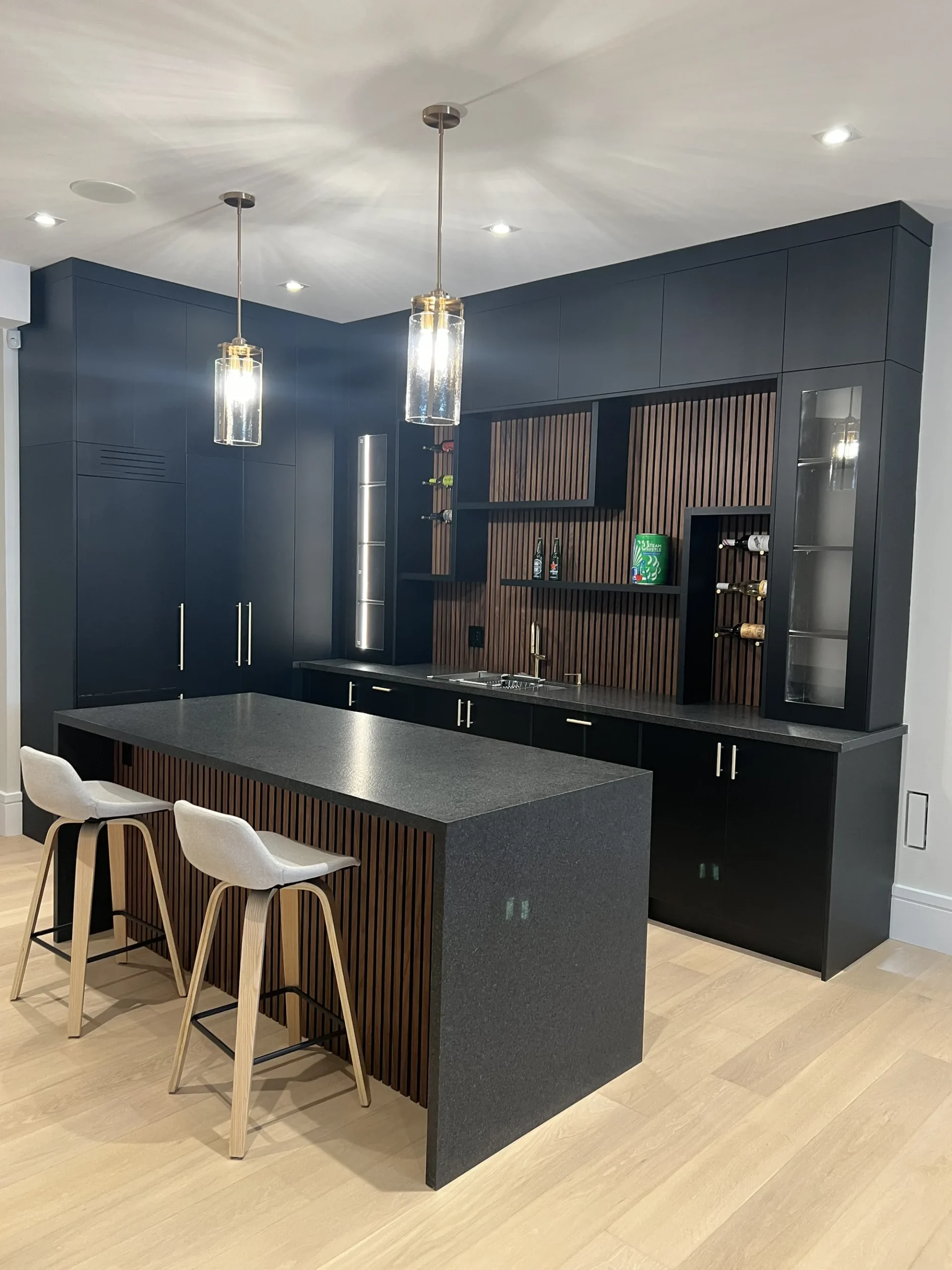
Most coffee bar cabinets start from standard kitchen dimensions: a 24-inch-deep base cabinet with a countertop at 36 inches. A 36-to-48-inch run is comfortable for one machine plus a landing zone — go wider if a grinder, kettle or bar fridge is joining the party.
The numbers below are honest starting points. Your wall, your machine and your routine set the final dimensions.
| Component | Typical spec | Why it matters |
|---|---|---|
| Base cabinet depth | 24 in. | Full-size espresso machines run 15–18 in. deep, plus working room in front |
| Counter height | 36 in. | Standard kitchen work height — comfortable for tamping, pouring and wiping down |
| Clearance under upper cabinets | 18–20 in. | Tall machines need headroom, and top-fill water tanks need even more |
| Run length | 36–48 in. | Room for one machine, a grinder and a true landing zone |
| Power | Dedicated outlet(s), planned early | Espresso machines are power-hungry — an electrician confirms circuit needs and local code |
| Water | Supply line with shutoff (plumbed machines only) | Far easier to rough in during the build than to retrofit after |
What Materials Stand Up to Steam, Heat and Daily Use?
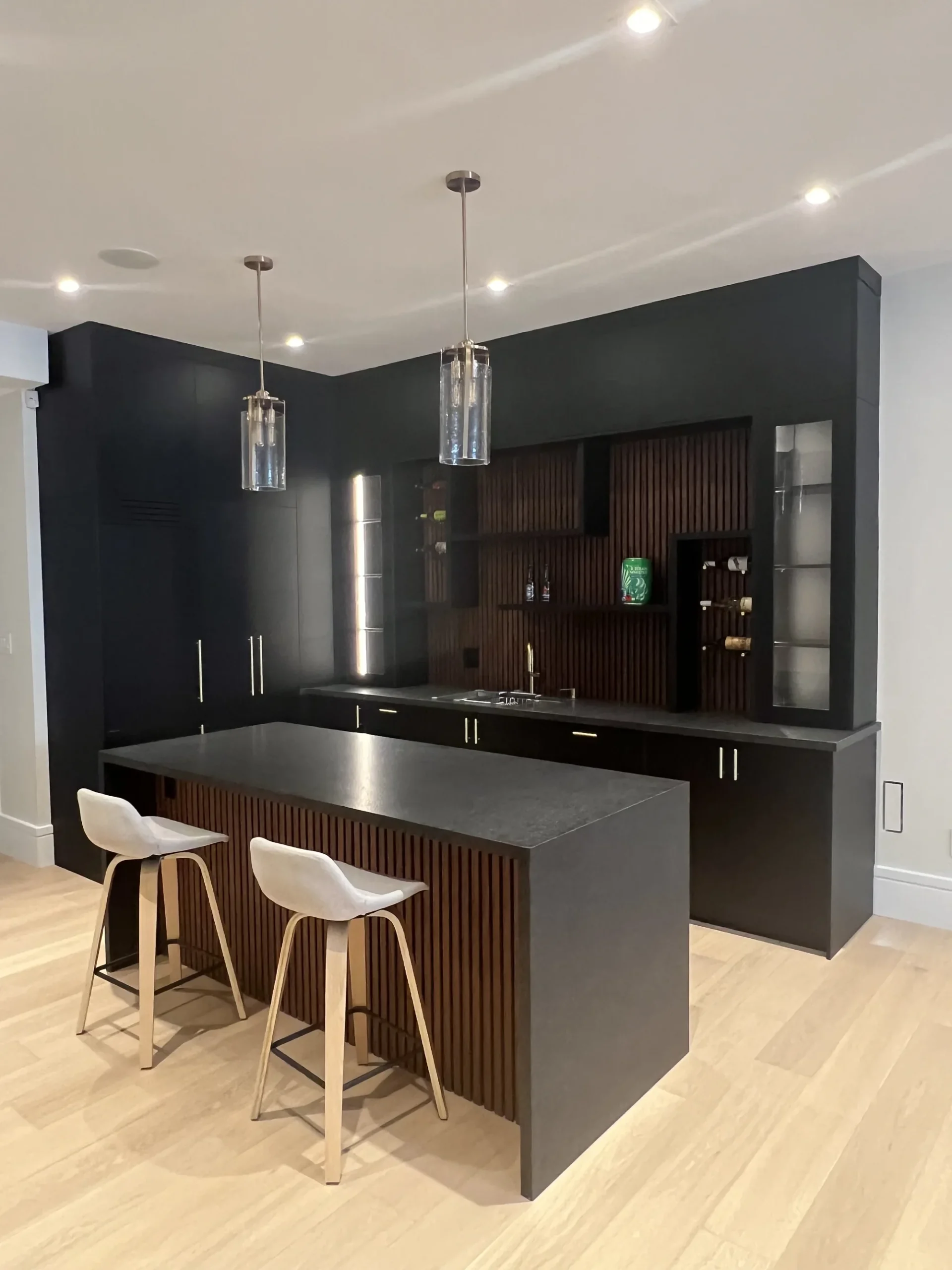
Coffee is hard on cabinetry. Steam rises, milk splashes, grounds scatter, and a hot machine sits in the same spot for years. Materials are where a coffee bar earns its keep.
Stone and quartz countertops shrug off heat and moisture. For the cabinetry itself, we build with the same materials as our kitchens — warm wood tones like walnut, painted doors, or fluted panels like the ones in the photos on this page — sealed with finishes that wipe clean.
Hardware matters more here than almost anywhere else in the kitchen, because a coffee cupboard opens every single day. For a benchmark: Blum, the Austrian hardware manufacturer, tests its hinges through 200,000 opening and closing cycles. That’s the standard daily-use hardware should live up to.
Coffee Bar, Beverage Station or Dry Bar Cabinet — What's the Difference?
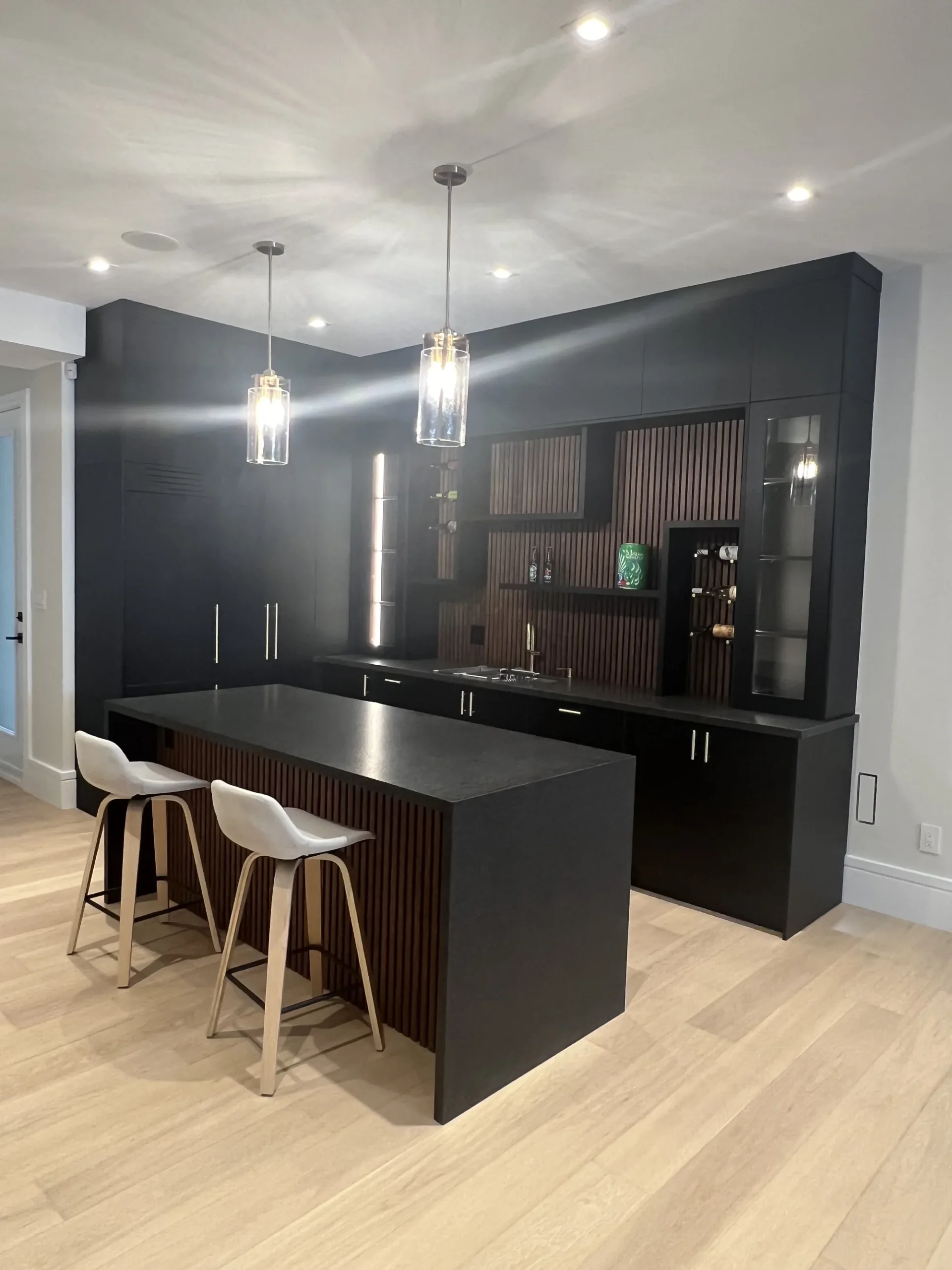
They’re cousins, not triplets. A coffee bar is coffee-first: machine, grinder, cups, beans. A beverage station widens the brief — tea, smoothies, kids’ snacks, often a bar fridge for milk and sparkling water. A dry bar cabinet skips plumbing entirely and leans toward evenings — glassware, display shelving, a stone top for pouring.
In practice the lines blur, and that’s fine — a custom build doesn’t make you choose from a catalogue. Many of the beverage stations we design sit right beside custom pantry cabinets, sharing a wall, a finish and a purpose.
Looking for Coffee Bar Ideas That Fit Your Kitchen?
The projects on this page are a good place to start: lit walnut shelving that turns everyday mugs into display, a black bar wall with glass towers, fluted panels that make the station feel like furniture. Steal any of them freely.
But the best coffee bar idea is the one measured off your actual wall — the awkward nook beside the fridge, the end of a custom kitchen island, the pantry wall that’s doing nothing. That’s the part a photo can’t give you, and the part a design consultation can.
How Much Does a Custom Coffee Bar Cabinet Cost?
The honest answer: it’s custom cabinetry, and the range is wide because the choices are. Rather than quote a number that won’t match your kitchen, here’s what moves the price:
- Size of the run — a single base cabinet versus a full floor-to-ceiling bar wall
- Plumbing and electrical — a water line, a dedicated circuit or under-shelf lighting each add trade work
- Materials — painted doors sit at one end of the range; fluted walnut and stone tops at the other
- Integrated appliances — a bar fridge or plumbed machine changes the cabinet design around it
- Details — glass doors, interior lighting, appliance garages and specialty drawers
The way to get a real number is the way we start every project: a free design consultation. We measure, we listen to how you actually make coffee, and we design to that. Book a free design consultation or call 705-315-9169 — a designer comes to you. Every cabinet we build is covered by a lifetime structural warranty.
FAQ
Coffee Bar Questions, Answered
Do I need a water line for a coffee bar cabinet?
Only if your machine is plumbed. Most drip brewers and tank-fed espresso machines just need a dedicated outlet and a solid landing zone. If you’re planning a plumbed espresso machine or a hot-water tap, the supply line and shutoff get designed into the cabinet run from the start — it’s far easier to rough in during the build than to retrofit later.
Can you add a built-in coffee bar to an existing kitchen?
Yes. A coffee bar doesn’t require a full renovation — it can take over a single wall, the end of a run, or a nook beside the pantry. Dream Spaces designs each unit to match your existing cabinetry or deliberately contrast it, then builds and installs it with our own team. It all starts with a free design consultation.
What is a dry bar cabinet?
A dry bar cabinet is a built-in drink station without a sink or plumbing — typically a counter for pouring, glassware storage above, and often a bar fridge below. Because it skips the water line, it can live almost anywhere: a dining room wall, a basement, the end of a kitchen run. Coffee bars and dry bars are often designed as one shared unit.
Where does Dream Spaces build coffee bar cabinets?
Dream Spaces designs, builds and installs custom coffee bars across Barrie, the GTA and southern and central Ontario. We’re a Canadian family-owned company — owners Todd and Trish Clifford have run it for more than 10 years — and every project is designed, built and installed by our own team. Book a free design consultation or call 705-315-9169 — a designer comes to you.
READY TO START?
Build Your Coffee Bar
Tell us about your wall, your machine and your morning routine — book a free design consultation or call 705-315-9169.
"*" indicates required fields