You have the keys. The truck is gone. You are standing in a house that is entirely yours and entirely full of cardboard, roughly a third of which is labelled “misc” in your own handwriting, which was a decision made by a person you no longer respect.
Everyone gives the same advice at this point: start unpacking. Get it done. You’ll feel better once the boxes are gone.
That advice is fine, and it slightly misses the most valuable thing about the situation you’re in right now.
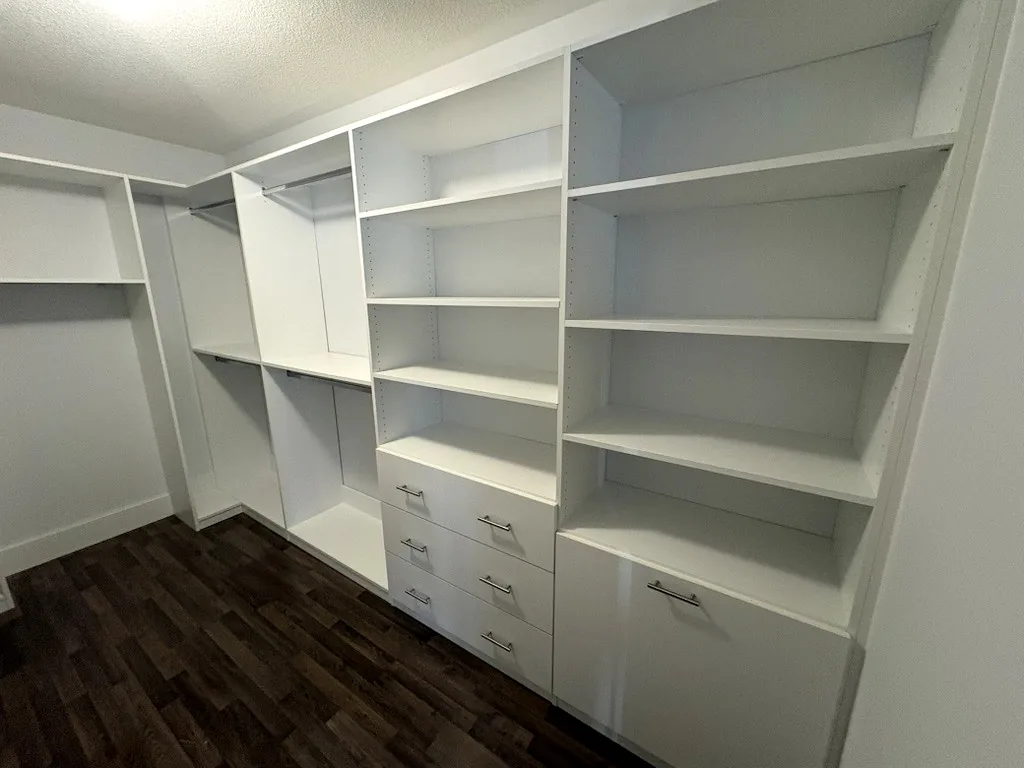
Every closet in this house is empty. The pantry is empty. The garage is empty. The linen cupboard, the front hall, the space under the stairs — all of it, empty, at the same time, for the only time. In six weeks it will be full, and whatever it’s full of will stay roughly that way for years, because the way you unpack quietly becomes the way you live.
Which makes this — right now, before the boxes get opened — the cheapest and easiest moment you will ever have to get storage right. Not the most convenient. The cheapest. Measuring an empty closet takes ten minutes; measuring one with two people’s clothes in it takes an afternoon and a bad mood. A closet designed around the clothes you own is a different conversation when the room is bare, and kitchen and pantry storage planned around how you cook is much easier to think about before four hundred items have been distributed semi-randomly across eleven cupboards.
Most of what follows costs nothing. Here’s what’s actually worth doing in the first few weeks of unpacking after a move.
First, the Seventy-Two Hours That Aren’t Projects At All
Before any of this: find the essentials box, make the beds, and get one bathroom fully functional. Unpacking after a move goes badly when everything becomes urgent at once, so the first two days are triage, not progress.
If nobody packed an essentials box, assemble one in reverse — toiletries, medications, chargers, toilet paper, a few dishes, coffee, snacks, pet food, pyjamas, scissors, garbage bags. Then stop. You don’t need to unpack a kitchen to make coffee, and you don’t need to open six boxes to find toothpaste.
Beds next, because everything is worse without sleep, and if there are kids in the house, their room first. A few familiar books and a familiar blanket does more for a child’s first night in a new house than an entire unpacked living room.
Then bathrooms, because they’re small, they’re quick, and finishing one room completely on day two is disproportionately good for morale.
That’s it for triage. Now the part that matters.
One: Measure the Closets Before You Fill Them
Take a tape measure to every closet in the house while they’re still empty. It’s the highest-value twenty minutes of the entire move.
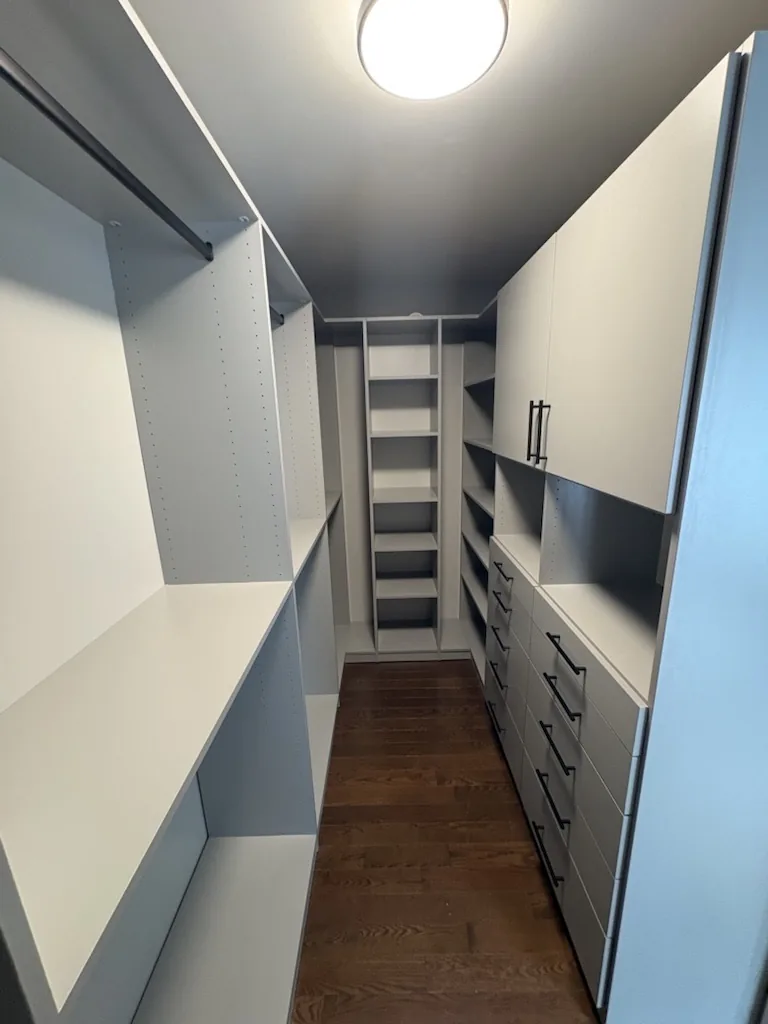
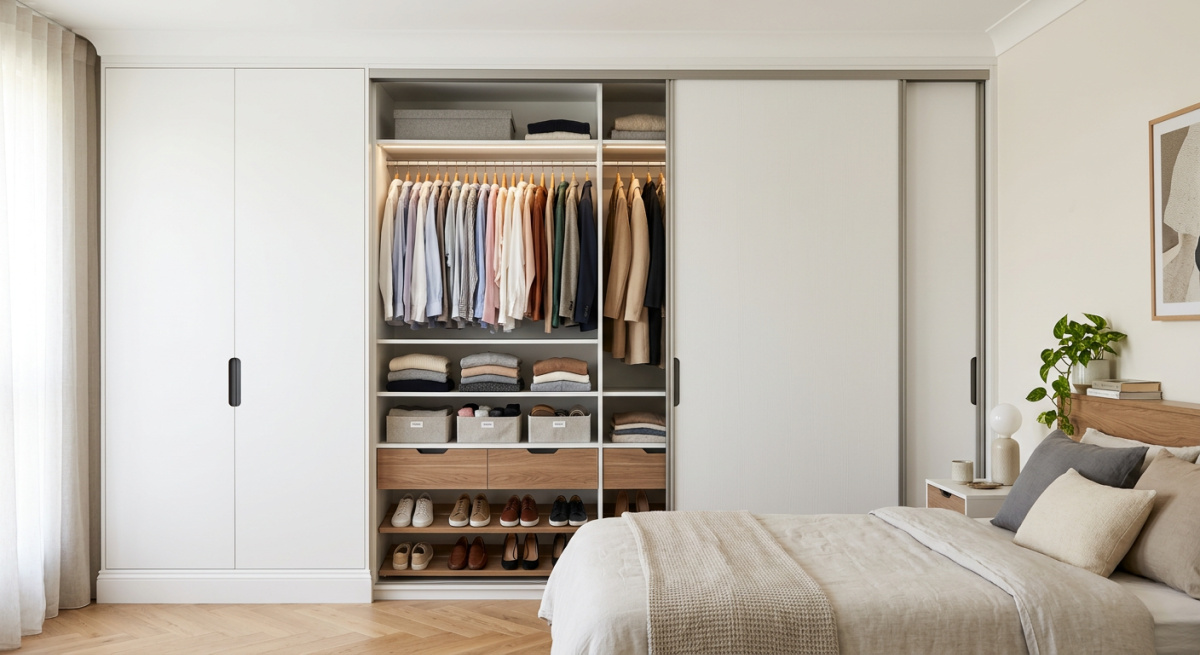
What you’re looking for is dead air. The builder’s default in most Ontario homes — new build or 1970s bungalow — is one rod and one shelf, set at a height chosen by nobody in particular. Underneath the shirts, blouses and folded trousers there is very often a full metre of nothing. Above the shelf there’s usually another half-metre of nothing. In a reach-in closet, that’s most of the closet.
Write down for each one: total width, the height under the rod, and the depth. Then ask what actually has to live there. One of our designers frames it as a simple ratio question — how much of your wardrobe hangs long, how much hangs short, how much folds, and how many shoes are we really talking about. Those four numbers determine everything, and they’re much easier to answer honestly while your clothes are still in boxes and visibly finite.
If you do nothing else with this list, use it to avoid the classic mistake: filling a closet on autopilot in week one, then living around its flaws until you move again.
Two: Give Every Closet a Job Before It Takes One
Closets are dangerous during a move. Not dramatically. Dangerously in a “just put it in there for now” way.
Every home has one closet that becomes the place where homeless objects go, and it is always decided by accident in the first fortnight. So decide on purpose instead. Walk the house and say out loud what each space is for:
The front closet is for coming and going — coats in current rotation, shoes in current rotation, bags, leashes, umbrellas, reusable bags. Not seasonal storage. In a GTA winter this closet does more work than any other in the house and it is almost always the smallest.
The linen closet is for towels, sheets and blankets, grouped by category, not by which shelf had room.
Bedroom closets are for the current season. Off-season goes somewhere else — and decide where now, because come November the parkas will arrive whether you have a plan or not.
The spare room closet is the one that becomes the junk closet. Give it a real assignment — luggage, gift wrap, off-season clothes, sports gear — and it will hold that line for years.
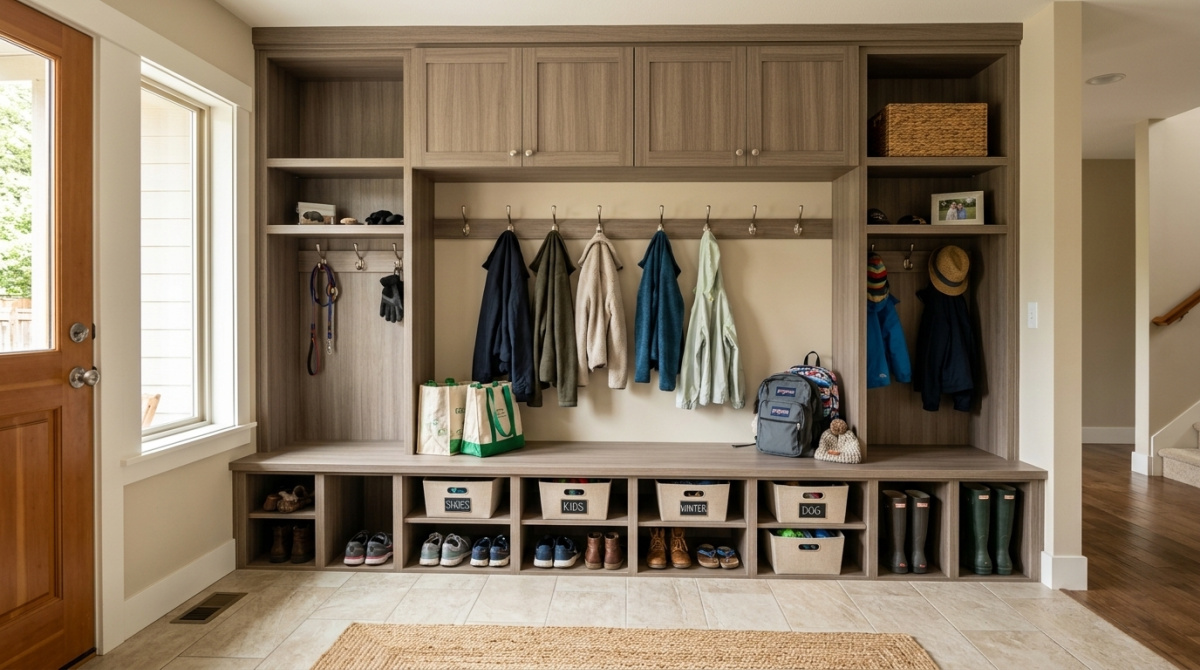
The entryway or mudroom, if you have one, is the whole household’s landing strip: backpacks, boots, hockey bags, mitts. If everything in your house piles up within two metres of the back door, that’s not a discipline problem, that’s a storage brief.
Three: Unpack the Kitchen by Routine, Not by Box
The kitchen takes the longest and matters the most, and the single best thing you can do is refuse to unpack it in box order.
Work in zones instead. Cooking: pots, pans, utensils, oils, spices, boards, mitts — all within a pace of the stove. Prep: knives, bowls, measuring things, beside your main counter. Coffee and breakfast: mugs, kettle, toaster, cereal, in one place, so mornings stop spreading across the whole room. Cleanup: soap, tabs, bags, cloths, at the sink. And if kids get their own snacks and water bottles, a low shelf they can reach, which buys you back roughly a hundred interruptions a month.
The question to ask over every box is not “where does this fit?” but “where will this make sense in six months?” Those are different questions and only one of them produces a kitchen you like.
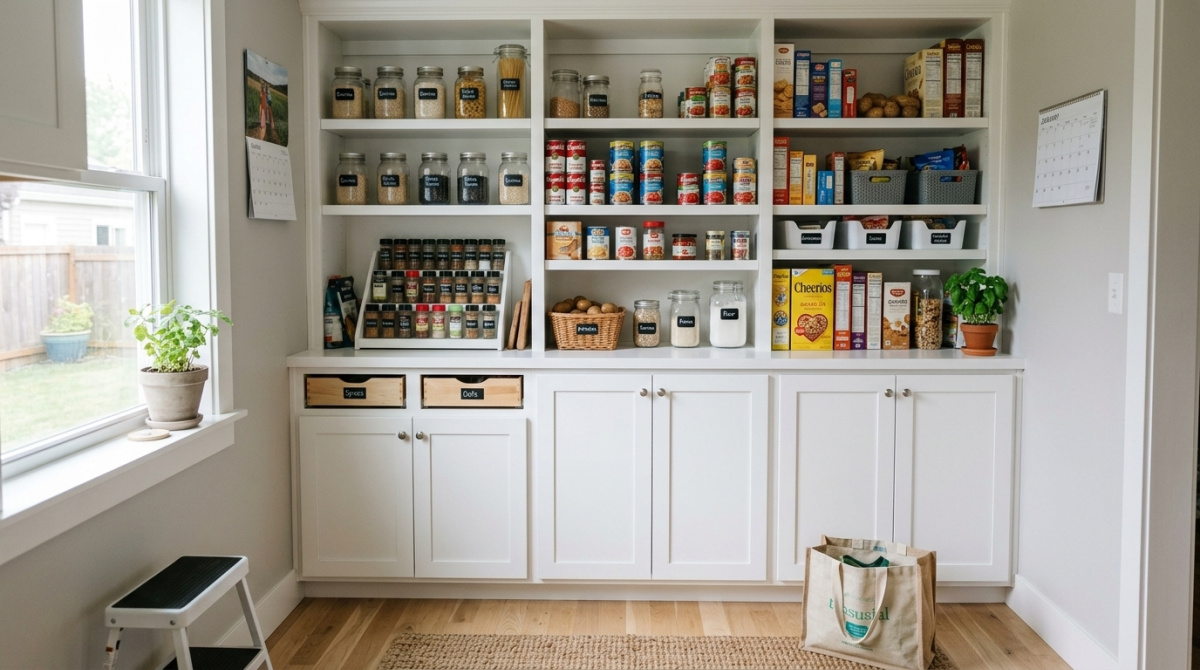
While you’re at it, do the pantry before the first big grocery run, not after. Group by category — breakfast, snacks, baking, pasta and grains, cans, oils and sauces, spices, lunch supplies, backstock — and put the everyday categories where you can see them without kneeling. Deep shelves are the usual villain here: anything more than about arm’s-depth turns into archaeology, and the second row becomes a museum of things you bought twice.
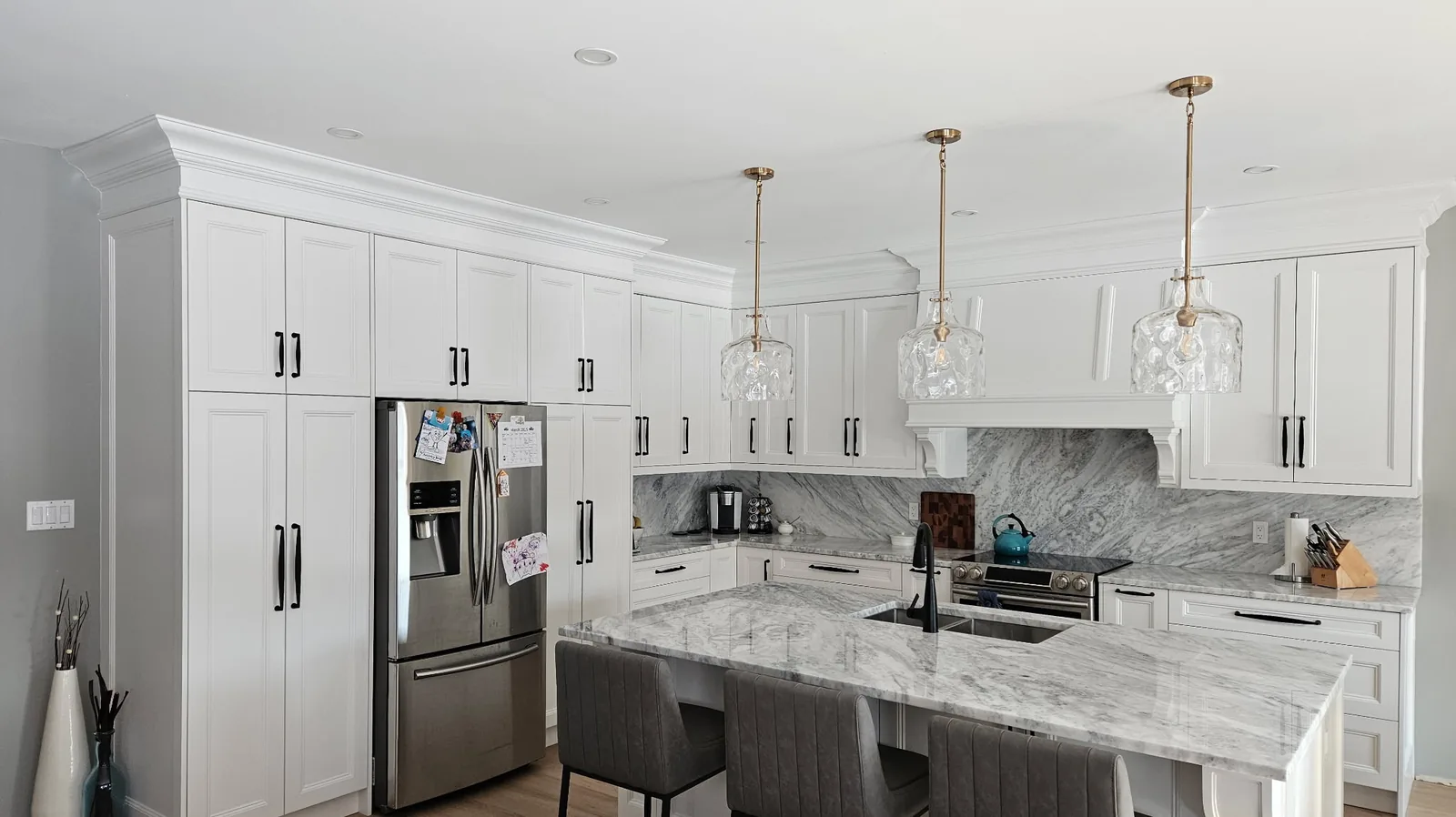
Our piece on kitchen design ideas for a more functional home goes further into zones, drawers and pull-outs if you’re weighing changes to the room itself.
Four: Make the Laundry Room Earn Its Keep in Week One
Laundry rooms get ignored during a move because they aren’t exciting. Fair. But this room quietly decides how much clutter the rest of the house carries.
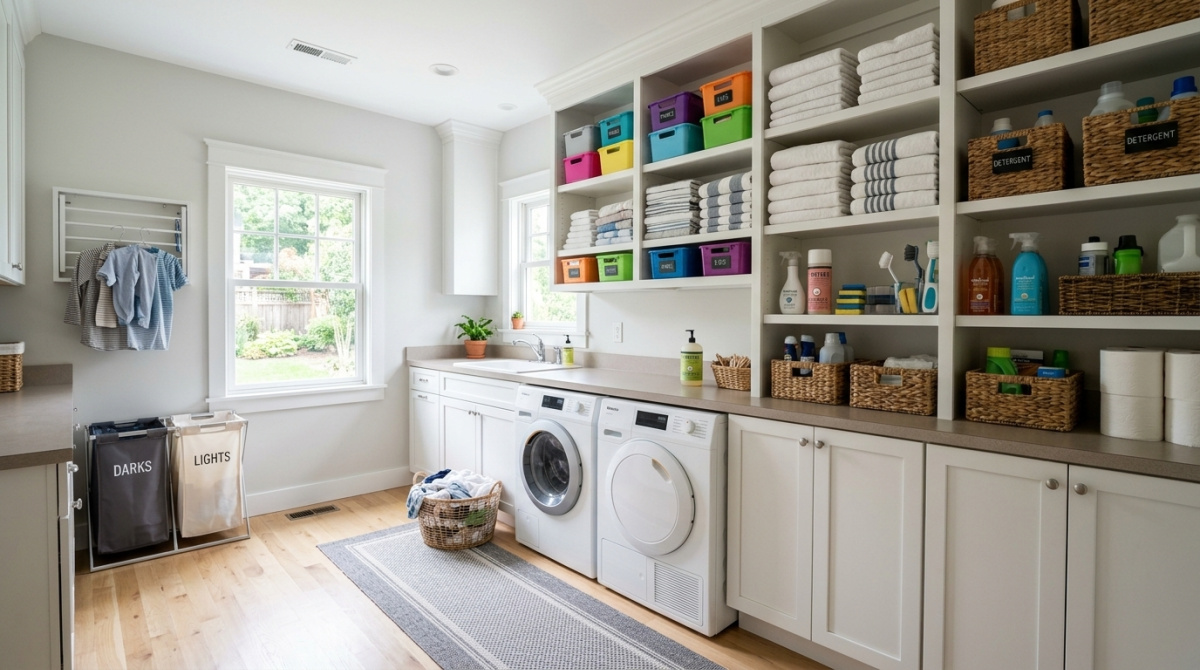
Set up the basics — detergent, stain remover, hampers, baskets, cloths — and then answer the real question: what else is this room doing? In most homes it’s also the cleaning cupboard, the pet supply station, the overflow from the back door, and the place sports gear goes to dry. That’s four jobs. Assign them deliberately, or the room will assign them to itself and you’ll be storing dog food beside the fabric softener for a decade.
Five: Claim the Garage Before It Claims You
The garage is the last place anyone unpacks, which is precisely why it ends up holding everything nobody made a decision about. Boxes go in “temporarily” in July and are still there when you’re scraping the windshield in February because the car doesn’t fit.
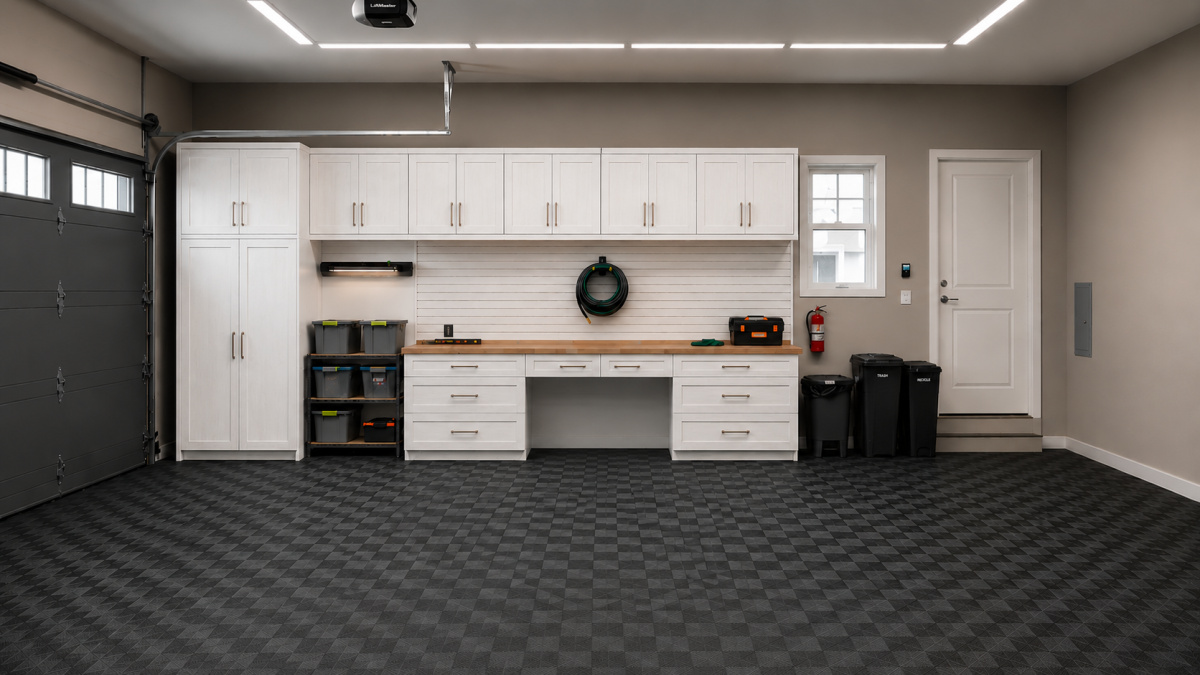
Treat it like any other room and give it zones: tools, sports gear, garden, seasonal décor, bikes and helmets, car care, cottage and camping gear, bulk household. Get things off the floor — walls and overhead space are the actual capacity in a garage, and the floor is the part you need for the car.
If you moved in warm weather, set yourself a hard deadline of Thanksgiving. Ontario decides this one for you either way; you may as well decide first.
The Boxes You Don’t Open Are Telling You Something
Here’s the free audit nobody uses. Somewhere around month three, you’ll have a handful of boxes that never got opened.
Don’t open them.
You have just run the only genuinely objective experiment on your own possessions that will ever be available to you: you lived a full season without these things and did not notice. Label them, give them a date, and if the date passes without anyone going looking — donate the box unopened. Moving is the one time this test is free.
The same logic applies to what you did unpack. Duplicate kitchen tools, linens for beds you no longer own, décor that suited the last house’s light — a move surfaces all of it at once. Let it go while everything is already in motion.
If You Haven’t Moved Yet, One Visit Does Most of This
If you’re reading this before the truck rather than after it, there’s a version of all of the above that takes about forty minutes and happens during a pre-closing visit or the final walkthrough.
Bring a tape measure and your phone. Photograph the inside of every closet, cupboard and storage space in the house — with the tape held up in frame so the photos are actually measurable later. Get the width and rod height of each closet, the depth of the kitchen cabinets, the garage’s usable wall length, and whether the basement stairs will take a sofa. Open the panel doors nobody opens.
Two things come out of that visit. The first is that you can plan where the seasonal gear, the luggage and the off-season clothes are going before they arrive, which is the single biggest cause of the “put it in the spare room for now” spiral. The second is that if any space is going to need real work, you now know it on day zero rather than month six — and an empty house is far easier and faster to work in than one with furniture in it.
A note for anyone with a winter closing, which in this part of the province is a coin flip: the front hall is your first and worst problem. Boots, salt, wet coats and no system, on day one, in a house where nothing has a place yet. Put a mat and a boot tray at the door before a single box comes in. It sounds like nothing. It’s the difference between a hallway and a swamp.
A Realistic Timeline, and the Step Most People Skip
Unpacking after a move takes longer than anyone plans for, and the honest version looks something like this. Essentials, beds and one bathroom in the first day or two. Clothing, kitchen zones, daily closets and pantry basics in the first week. Garage, laundry, décor and the low-priority boxes over the first month or so.
Then the step almost everyone skips: at the one-month mark, walk the house and write down what’s annoying you. Not what’s unfinished — what’s annoying. The entryway that floods with shoes. The pantry shelf you can’t see the back of. The closet where two people are sharing one rod badly. The garage that swallowed the bikes.
That list, written after four weeks of real life, is worth more than any amount of planning done on moving day. It’s also the right moment to buy organizers — not before. Bins bought in week one are bought for an imaginary house. Measure first, live in it second, buy third.
And if the list keeps pointing at the same space, that’s a design problem rather than a tidying problem, which is the more fixable of the two. When you get to that point, book a free design consultation with one of our designers. Empty closets are the easiest thing in the world to plan around — but a month-old list of complaints is the next best thing, and it’s usually more honest.